How we verify our supply
Most peptides in Nigeria arrive with no paperwork at all. Here is what ours goes through before it reaches your door.
Most of the world's peptide raw material is made in a small number of factories in China. That includes material that ends up in Western pharmacies at ten times the price. The country is not the risk. The risk is the vendor in the middle, who relabels, cuts and resells with nothing to show for it.
Test one: is it what it says?
Mass spectrometry weighs the molecule. Every peptide has a known molecular weight, so if the number does not match, the vial is something else. That is identity.
Test two: how much of it is it?
High-performance liquid chromatography (HPLC) separates the peptide from everything else in the vial and measures the share that is the real thing. Our floor is 98%. Anything below it goes back to the supplier.
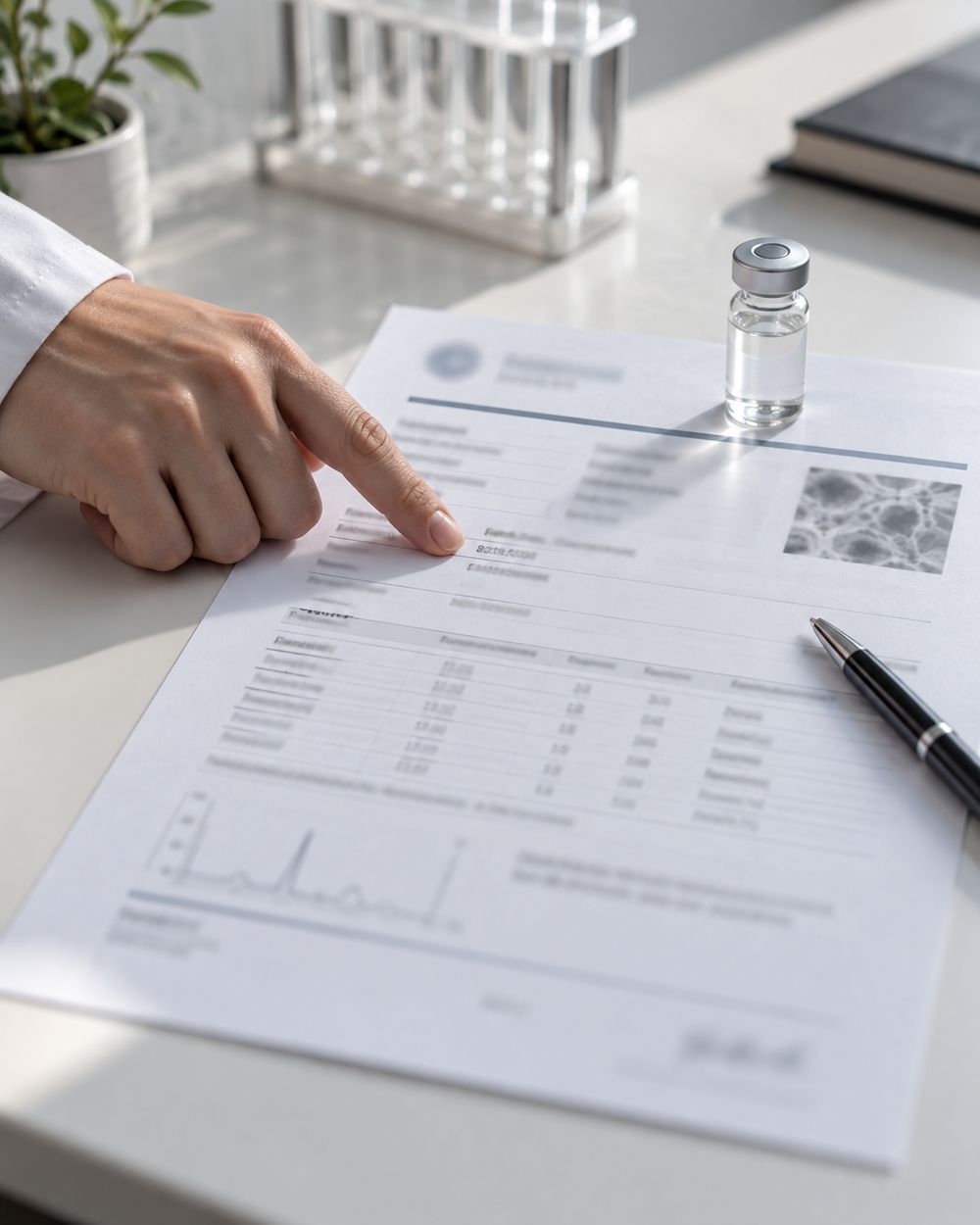
Two labs, two reports, one batch number. If they disagree, nothing ships.
Test three: is it clean?
An injectable can be perfectly pure and still make you ill if it carries bacterial toxins. We check endotoxin levels using the LAL test, the same method used for hospital injectables, and sterility on every batch.
How you check us
Every vial carries a batch number. Both certificates are in your box, and you can look up the batch on our site. If anything does not match, message us and you get a full refund the same day.
One thing testing does not change: these are not NAFDAC-registered finished medicines. Testing tells you what is in the vial. Your doctor tells you whether it belongs in you.
- United States Pharmacopeia. Chapter <85> Bacterial Endotoxins Test.
- United States Pharmacopeia. Chapter <621> Chromatography.